Silence

This is Western Coffee—notes on building the creative body. Last time: Fitness. The whole series is here. Please share this email; you can sign up free below.
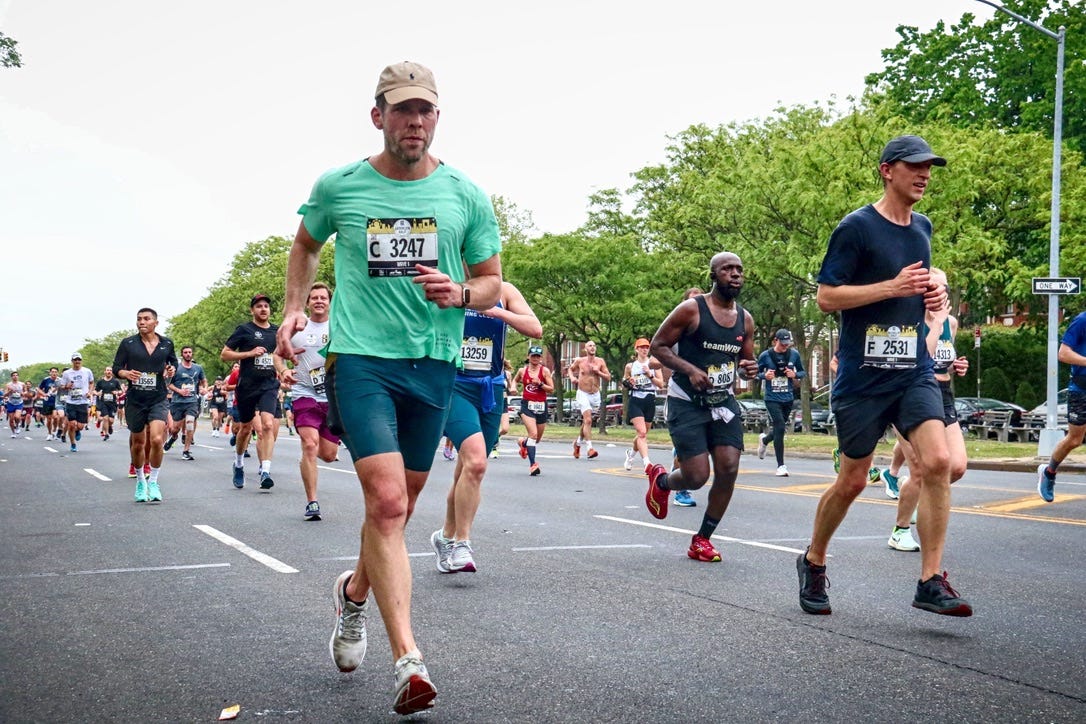
I finished a half-marathon on Saturday, and what I have to say about it begins with forgetting my headphones.
The charging case made it into my pocket that morning, but when I opened it in the frenzied minutes before the starting horn, I found it empty, and realized I would be running with, no more and no less, my thoughts. It’s too dramatic to call this a worst-case scenario; I could have broken my leg. But it wasn’t great.
In the second half, when the running got very hard—I was only a few days out of bed with a sinus infection—my thoughts settled on the movie I had watched the night before with my mom, who was visiting, and my boyfriend. It is “Howard,” about the lyricist most of us know through his work on a string of ’90s cinematic monuments from Disney: “The Little Mermaid,” “Beauty and the Beast,” “Aladdin.” These songs were the soundtrack of my childhood; I had a “Mermaid” poster over my bed when I was in third grade.
As he wrote those songs, Howard Ashman was dying of AIDS. Even most of his colleagues didn’t know this at the time—he feared losing his job over it—and of course word never reached the Villa Theatre in Utah, where I feasted on those movies in the company of my aunts.
When he died, Ashman was barely older than I am now. His story was fresh on my mind during the long, straight, gloomy, and silent six-mile plod from Prospect Park to Coney Island, and so were those of the 100,000-plus other New Yorkers claimed by the same disease. That would be more than four of them for every runner on the course. First I pictured them lining either side of Ocean Parkway, and then I pictured them striding with us. At the end I imagined them doing what I was doing, running into the arms of their lovers and their moms.
I’d like to leave it there, but I read something the other day written by a gay man—who survived the period that Howard Ashman did not—that filled me with a lingering sadness and rage. In a hypocrisy to boggle the mind, he placed transgender people in the role of scapegoat to which gay men have so often been consigned, which is similarly predicated on our failure to conform to other people’s dogma about gender and sexual identity. This is not a political newsletter. But despite the best efforts of those who seek for obviously self-serving and tyrannical purposes to make it so, the protection and care, and most essentially the survival, of transgender people, particularly the ones who are most vulnerable because they are children, is not a political issue. The present, same-as-it-always-is flare of anti-LGBTQ+ hysteria in America is not a political issue. It’s an issue of survival: for me, and for other people you know. I despise the fact that we are still defending our survival rather than, say, our dignity and our joy. But there it is.
During that tuneless run I thought about the motto of the protesters watching their country quietly concede to the literal decimation of an unpopular minority in the 1980s and ’90s, a motto that centered on a different kind of silence: Silence = death.
Kindly send me your thoughts, questions, and provocations: dmichaelowen@gmail.com. And say hi on Instagram, or let’s Peloton together: @leggy_blond.